Why teeth turn yellow — and 10 evidence-based ways to whiten them again
Coffee, wine, age: your smile dims for reasons largely out of your control. We looked at what a whiter smile actually takes — and found that most of the home remedies people swear by only get you halfway.
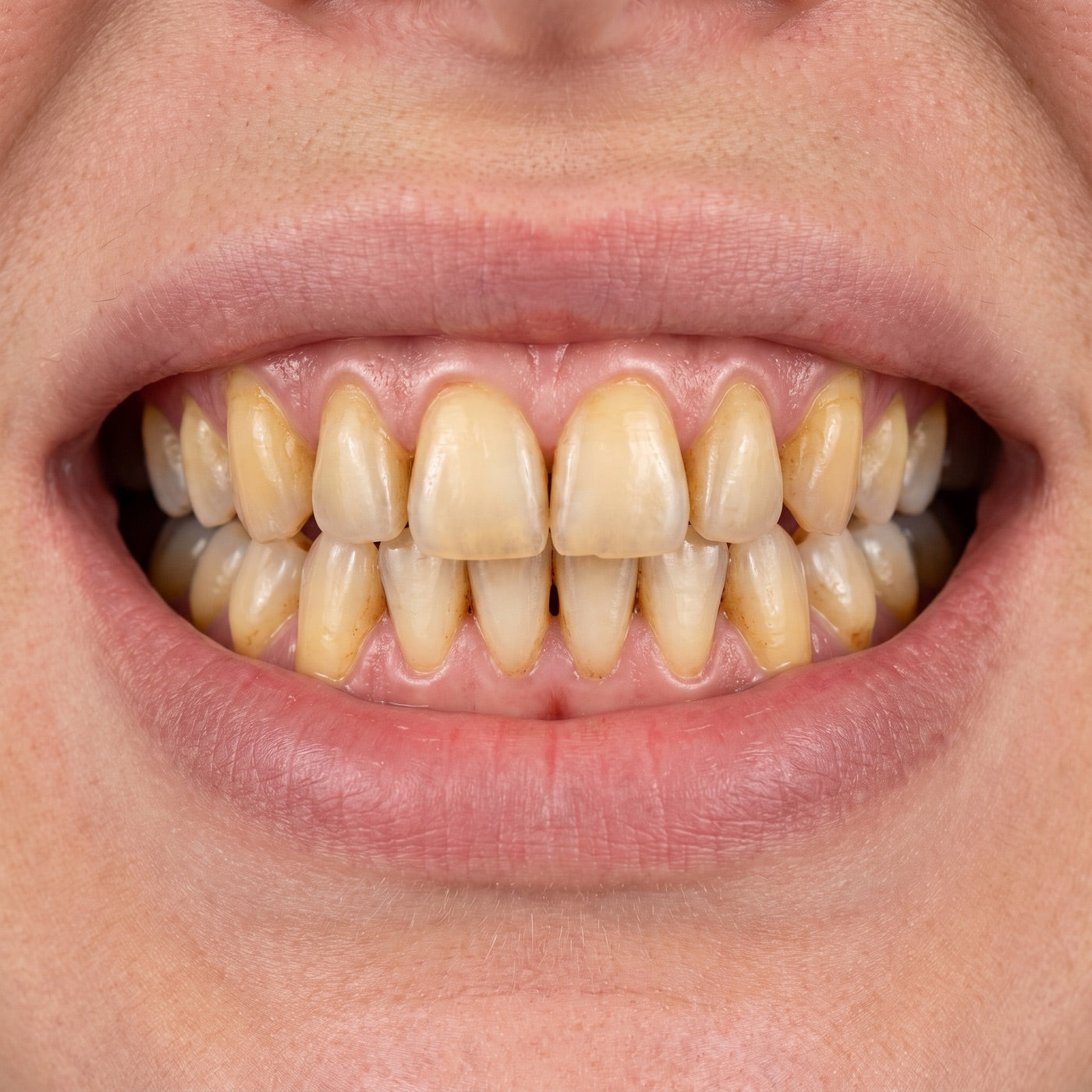
If you've started noticing your teeth look a little more yellow in photos than they used to, you're not imagining it — and you're far from alone. Searches for how to whiten teeth run into the millions every month, most of them from people who brush twice a day and still can't work out why their smile keeps dimming.
The short answer is that yellowing is mostly built in, not "dirty." Every coloured thing you drink — coffee, tea, red wine, cola — carries pigment molecules called chromogens. Enamel looks smooth, but up close it's riddled with microscopic pores. Those pigments settle into the pores and build up faster than ordinary brushing can clear them.
At the same time, enamel slowly thins with age — and the layer beneath it, dentin, is naturally yellow. So the older stain gets trapped and the yellow underneath shows through more. That's why teeth drift yellower every year even with a spotless routine. The good news: much of it is manageable, and some of it is reversible. Here are ten things that genuinely move the needle — roughly in the order we'd try them.
10 ways to whiten yellowed teeth
Start at the top. The habits come first; the heavier interventions come last.
Work out what you're actually fighting
Before you buy anything, know the difference. Extrinsic stains sit on the enamel surface and respond to cleaning. Intrinsic stains have soaked into the tooth — or come from age, medication or an old injury — and cleaning won't shift them. Most adult yellowing is a mix of both, which is exactly why any single product rarely fixes everything.
Rein in the big stainers — and rinse
Coffee, tea, red wine and cola are the worst offenders, with dark sauces, balsamic and berries close behind. You don't have to give them up — but swilling your mouth with plain water straight after cuts how long the pigment sits on your teeth. It's a tiny habit that adds up over months.
Use a straw for cold drinks
For iced coffee, cola and other cold staining drinks, a straw keeps most of the liquid off the front of your teeth. It does nothing for a hot flat white, admittedly — but for everything cold it's about the easiest win on this list.
Don't brush straight after acidic drinks
This one surprises people. Acidic drinks soften enamel for up to an hour. Brush immediately and you scrub away that softened surface — which, over time, lets more of the yellow dentin underneath show through. Rinse with water, wait 30–60 minutes, then brush.
Brush better, not harder
Hard scrubbing doesn't whiten — it wears enamel, and worn enamel looks more yellow. A soft-bristled or electric brush, two gentle minutes, twice a day, removes far more of the fresh surface stain before it hardens into the stubborn kind.
Clean between your teeth, every day
Stain and plaque collect exactly where a brush can't reach — between teeth and along the gumline. Daily flossing or a water flosser stops the shadowing at the edges of your teeth that reads as dingy even when the fronts look clean.
Try whitening toothpaste — but manage expectations
Whitening pastes use mild abrasives to buff fresh surface stain, so teeth do look a touch brighter for a while. What they can't do is reach pigment that's already soaked into the enamel — which is why the result plateaus early and never quite gets you to white.
Skip the charcoal and baking-soda hacks
These feel like they're working precisely because they're abrasive — and that's the problem. Scrubbing enamel thinner makes teeth look more yellow over time, not less, because more dentin shows through.
Dentists' rule of thumb: whitening should remove stain, never sand down the tooth. Once enamel is gone, it doesn't grow back.
Book a hygienist for a reset
A professional scale and polish clears hardened surface stain and tartar in a single visit — a genuine refresh. But it typically runs £80–£140, it doesn't touch deep intrinsic stain, and it starts fading again the next time you pick up a coffee.
To shift the deep stain, whiten it — safely
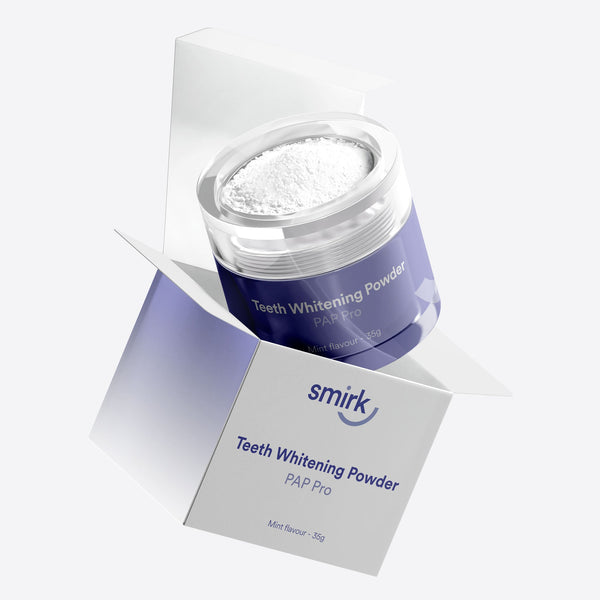
Everything above manages surface stain. The set-in yellow needs a whitening agent that breaks the pigment apart inside the enamel. Traditional peroxide bleaches can do it, but they're a common cause of the zinging sensitivity people quit over. The newer, dentist-approved approach is PAP — it lifts deep stain without peroxide, so no added sensitivity and it stays gentle on enamel.
So why does brushing never quite get you there?
Because almost everything on the shelf works on the wrong layer. Look closely at a stained tooth and the discolouration isn't sitting neatly on top — it has soaked into the enamel over months and years. That's the yellow a brush, a paste or a scale-and-polish simply can't reach.
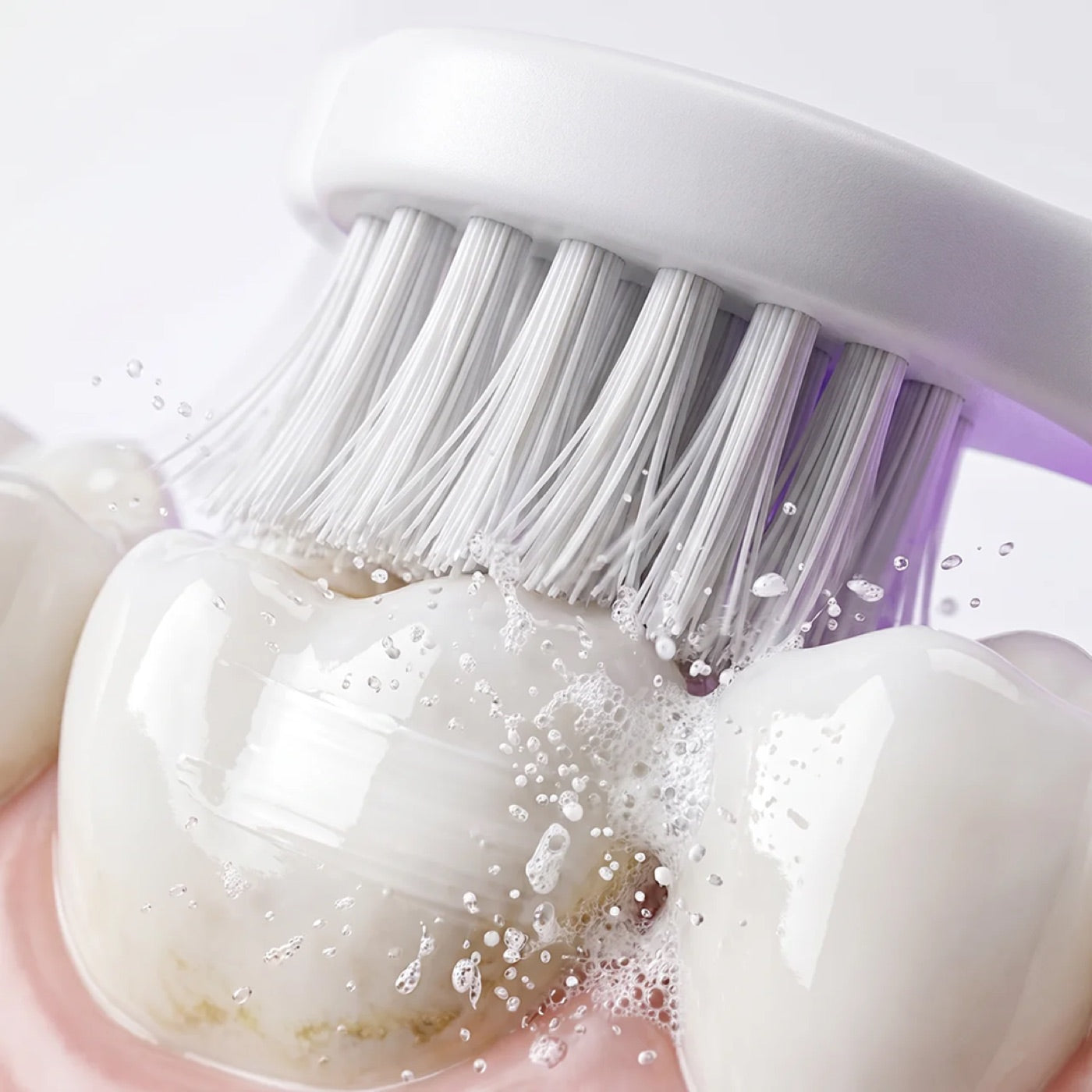
Surface stain
Fresh pigment on the enamel from your last cup of coffee. Cleaning and whitening paste can buff some of it away — which is why they seem to work at first, then stall.
Set-in stain
Pigment soaked into the pores of the enamel over years. Abrasives can't reach it — this is the yellow that never seems to budge, and the reason you're still searching.
You're really not the only one checking
Every day people take the same photo — mouth in the mirror, seeing how yellow it's got. This is what everyday staining actually looks like.
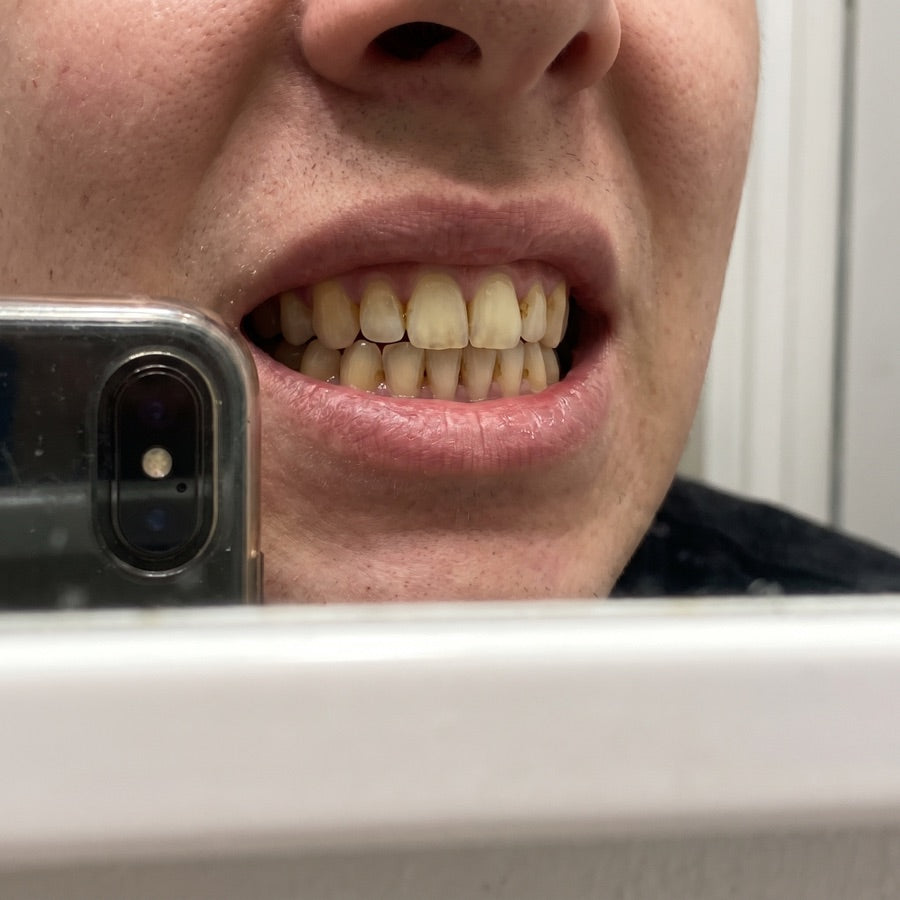
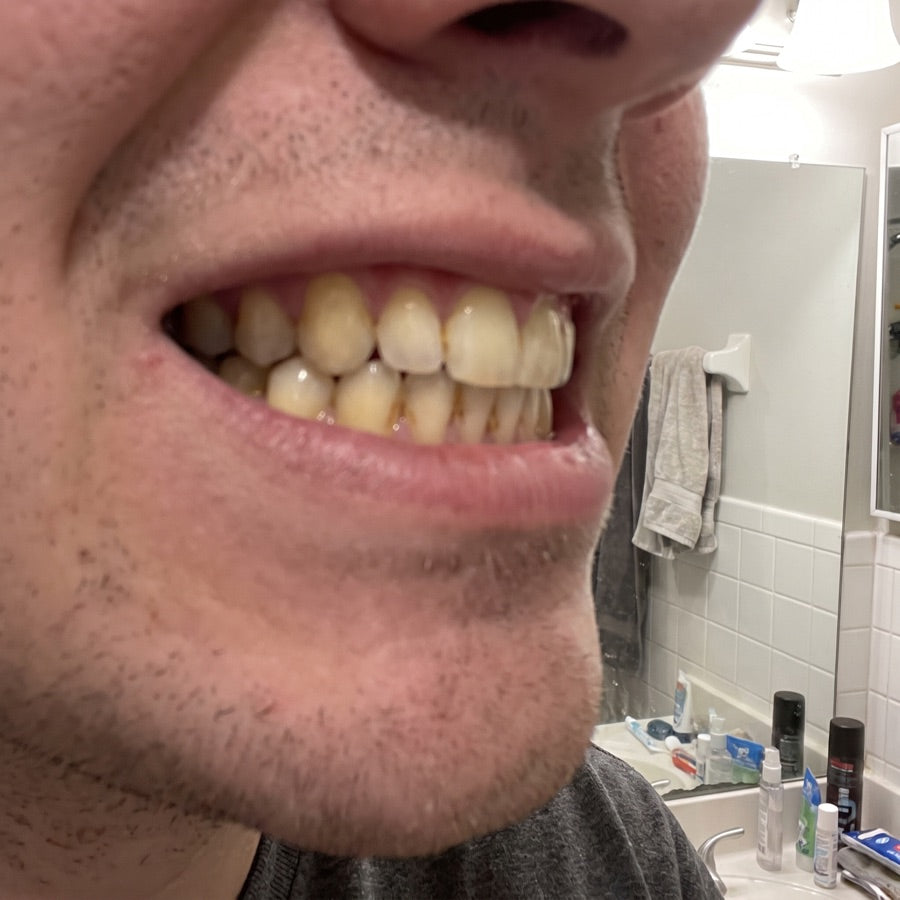
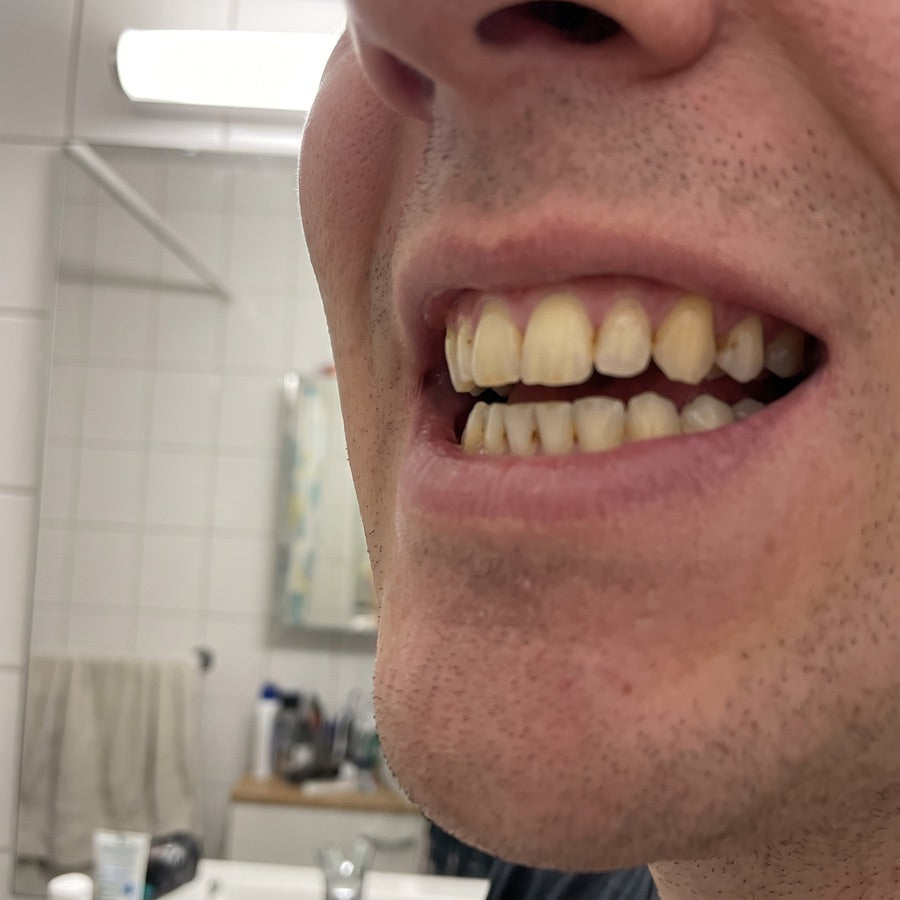
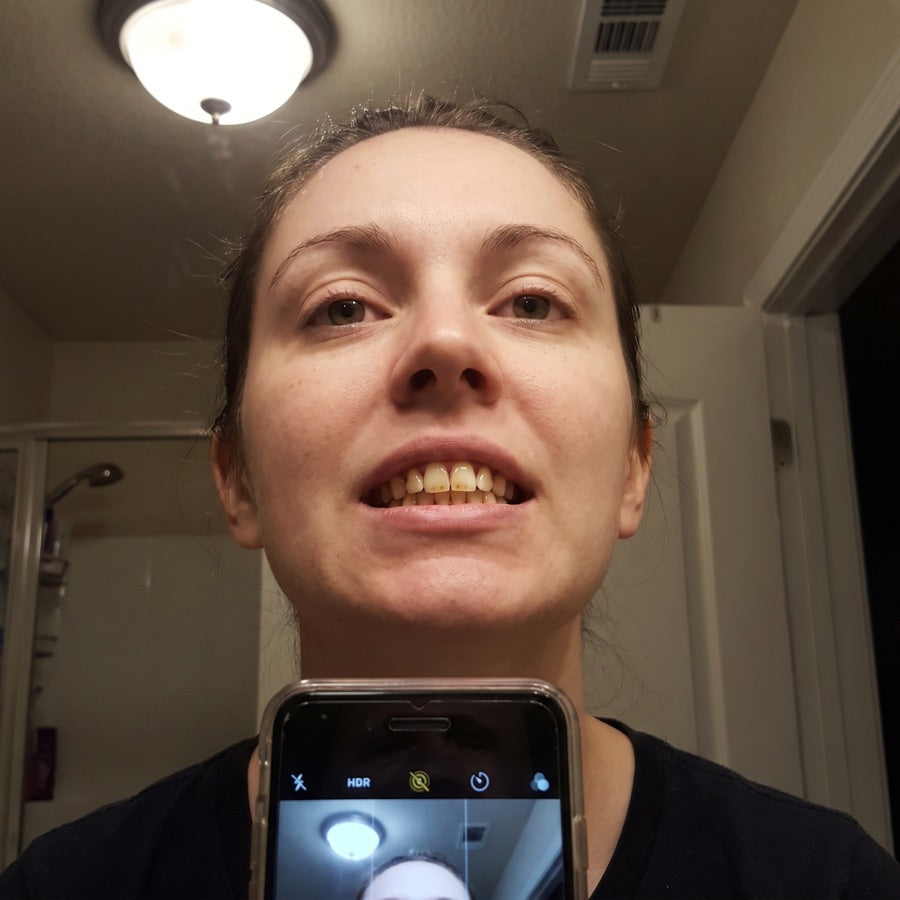
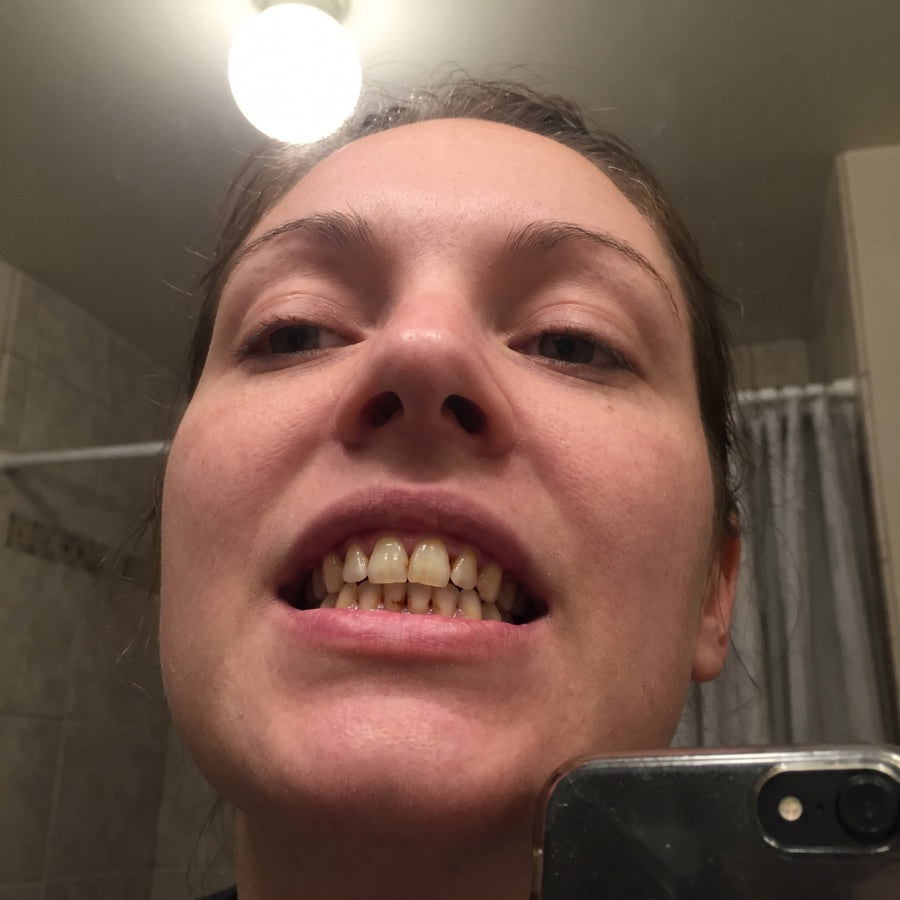
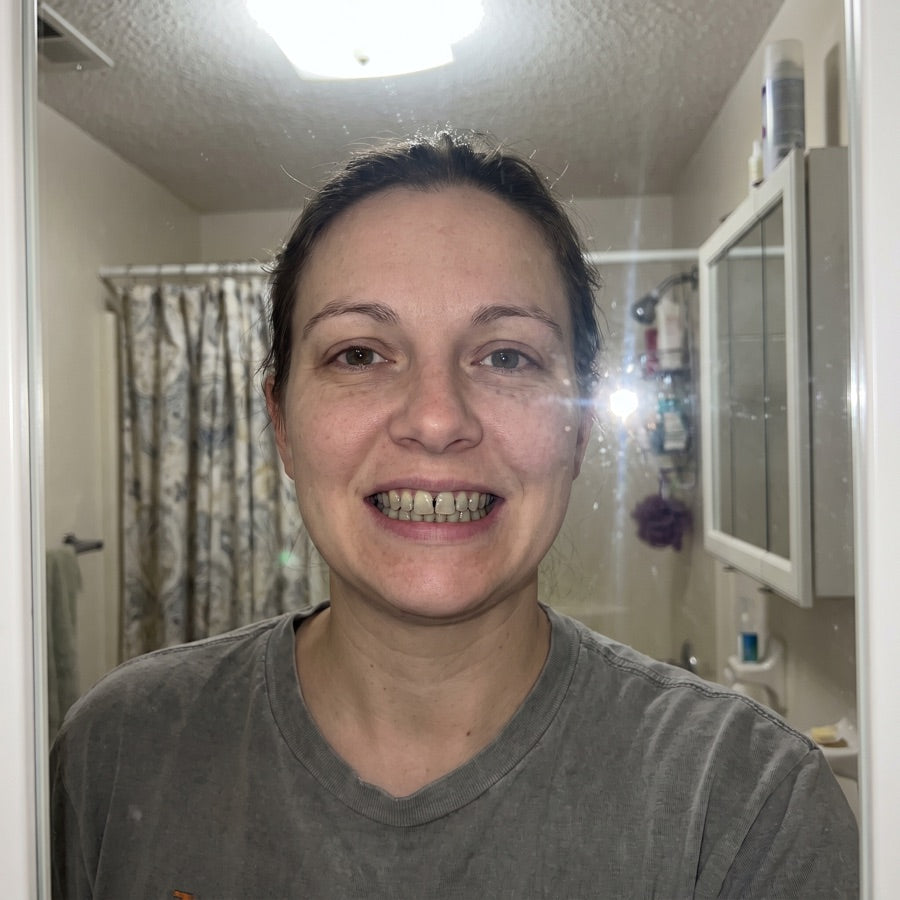
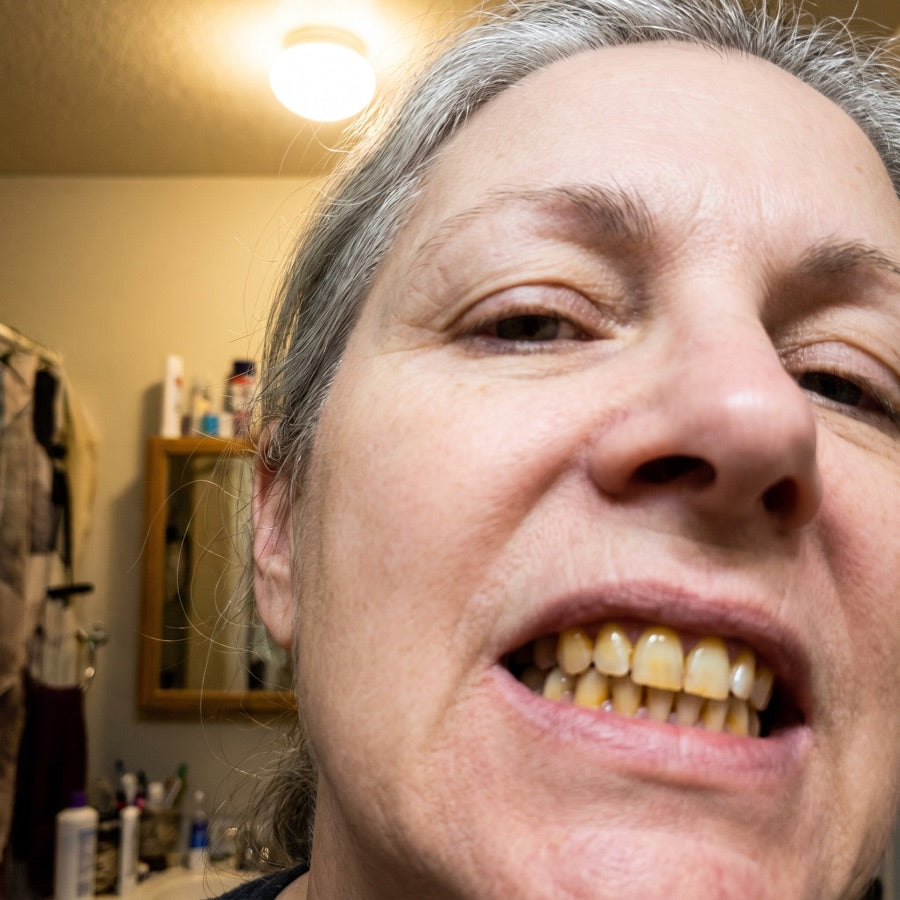
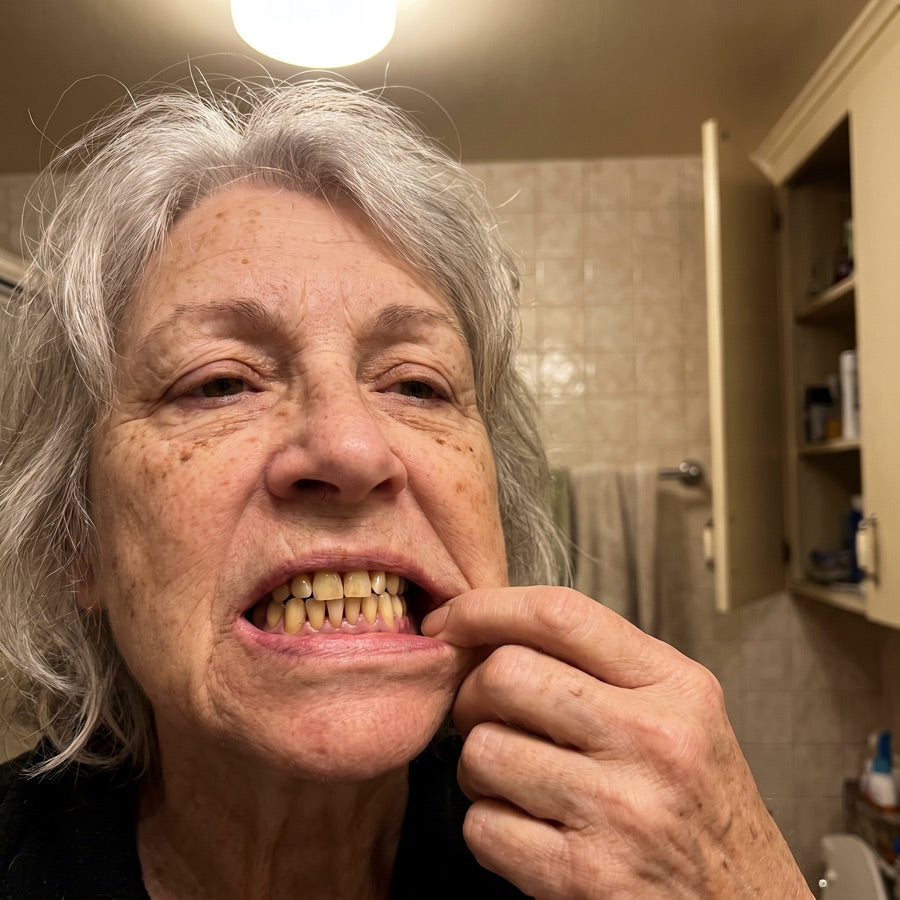
And it creeps up on you. Stain builds so gradually you don't notice — until a photo, a video call, or a mirror in bright light catches it. Then come the closed-mouth smiles and the deleted pictures. For most people it isn't about health. It's about not quite feeling like themselves.